Custom Home Features Edmonton Buyers Will Regret Not Including in 5 Years
There is a specific kind of regret that comes with building a home, not the wrong tile or the paint colour, but the things you realise two or three years in, when life has shifted and your home can't keep up. A family member needs to move in. You buy an electric vehicle. You start working from home full time.
Almost every one of these scenarios has a corresponding feature that costs very little to include during construction and a great deal to retrofit later. This is not a trends list. It is a regret prevention guide for anyone planning a custom home build in Edmonton.
1. EV-Ready Wiring in the Garage
This is not about installing a charger today. It is about running conduit from your panel to the garage while the walls are still open - a $300–500 decision that becomes $4,000–8,000 once drywall is up. Alberta's EV adoption is accelerating, and any home built for a 15–20 year horizon should plan for it. Ask your builder specifically for a 240V, 50-amp dedicated circuit rough-in to the garage. It takes an electrician under an hour during the build.
This kind of forward-thinking detail is exactly what separates builders who treat design and construction as one continuous conversation -a discipline that shapes everything from how your floor plan functions to how your electrical infrastructure ages.
2. Multigenerational Living Flexibility
Most custom home floor plans are designed for a household as it exists today. But Edmonton's demographics are shifting - aging parents, returning adult children, and legal secondary suites are becoming part of how families use their homes. The regret is rarely about not building a full suite from day one. It is about not building in the structural flexibility to create one later without a major renovation.
What that requires at the framing stage is modest: a separate entrance possibility, rough-in plumbing for a second laundry, a main-floor bathroom that doesn't pass through private space, and acoustic insulation between floors. None of this commits you to anything. It simply keeps the option open — which is precisely what a home designed to work across different life stages and household configurationsshould do.
3. Acoustic Design
Sound travels differently than most people expect in a custom home, and it is almost entirely a framing-stage problem. Open-concept layouts with hard flooring and high ceilings are reverberant. A home office sharing a wall with a mechanical room or a playroom is a genuinely difficult place to work. Once the walls are closed, options narrow and costs rise sharply.
What good acoustic planning requires isn't specialised engineering, it's room placement strategy, acoustic insulation in interior walls, and solid-core doors. These decisions cost very little at the build stage and dramatically change daily quality of life. A builder worth hiring raises this conversation without being asked.
4. Home Health and Air Quality Infrastructure
Edmonton's climate means sealed, heated interiors for six or more months of the year. What happens to the air inside those interiors matters more than most specifications reflect. This is not about gadgets, it is about infrastructure decisions made during construction that determine whether meaningful improvements are possible later without invasive work.
The specific conversations worth having before mechanical rough-in: HRV sizing and distribution, provisions for enhanced filtration, whole-home humidification integration, and a centralised low-voltage location for air quality monitoring. A home that breathes well feels better every single day, and it is far easier to achieve from day one than to retrofit into a finished home.
5. Wider Doorways and Barrier-Free Elements
This is not about planning for disability. It is about designing for a long life in a home you love. A standard interior doorway is 32 inches. A 36-inch doorway - which comfortably accommodates a wheelchair, a hospital bed, or large furniture - costs almost nothing extra at the framing stage. Once walls are finished and trimmed, widening a doorway means removing casing, drywall, and trim on both sides.
Similarly, blocking in bathroom walls during framing creates the structural backing for future grab bars at near-zero cost. A curbless shower in the primary ensuite reads as refined European design today and works without modification decades from now. These are among the home features that carry genuine long-term value, not because they're on a trends list, but because they extend how long a home can serve the people living in it.
6. Empty Conduit for Future Technology
Technology will keep requiring wiring. What changes is the specific form it takes. Running empty conduit through walls during construction to TV locations, exterior soffits, above the garage door, and to a central media panel - costs a few hundred dollars. Running wiring through finished walls costs multiples of that, plus patching and painting. The rule is simple: conduit is cheap when walls are open. Run more than you think you need. The ones you don't use cost nothing. The ones you wish you had are expensive.
7. A Heated Garage With a Utility Sink
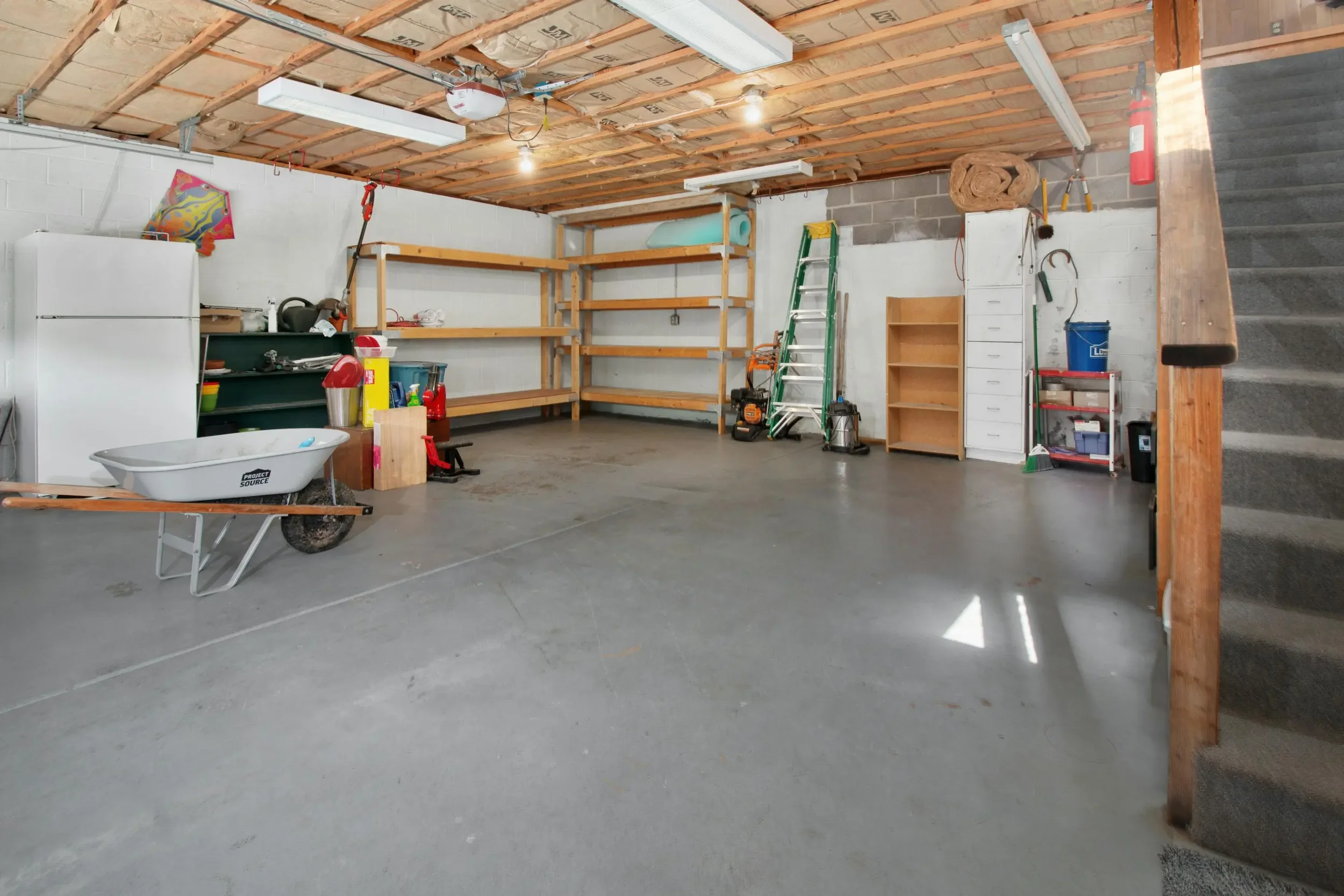
In Edmonton's climate, a garage is not simply where you park. For six or more months of the year it is a workspace, a mudroom overflow, a gear-maintenance area, and one of the primary entry points into the home. In-slab heating and a utility sink rough-in - a drain and a cold water line need to happen before the concrete floor is poured and the walls are insulated. The cost of including it during the build is a fraction of a retrofit, and the homeowners who skip it report the same regret every Alberta winter.
8. Panel Capacity and Dedicated Circuits
Electrical panels are sized to code minimums by default. Code minimums were written for a previous era's load. Modern households with EV chargers, high-draw kitchen appliances, home offices, and media rooms - routinely stress panels that were adequate at construction. The conversation worth having before electrical rough-in: is your panel sized for the next 15 years, not just today? Dedicated circuits for the kitchen, home office, and outdoor entertainment areas are inexpensive to plan for now and disruptive to add later.
The One Thing These Features Have in Common
Each of these is a decision made once, at the right moment, that shapes the useful life of the entire home. None require a larger budget, they require a builder who is thinking about where your life is going, not just what your floor plan looks like today.
Many of the homeowners who reflect most honestly on the custom build process, the ones who share what they'd do differently - point to exactly this category of decision: not the finishes they chose, but the infrastructure they didn't think to ask about until it was too late. Those conversations are worth having before you break ground.
And if you haven't yet chosen a builder, the way a builder responds to these questions in your first meeting tells you a great deal about how they approach the build process and whether they're thinking beyond the contract.
Planning a custom home build in Edmonton or the surrounding communities? Book a consultation with Kaidian Custom Homes - we'll walk through your floor plan with exactly this lens.
Follow us!
related articles